
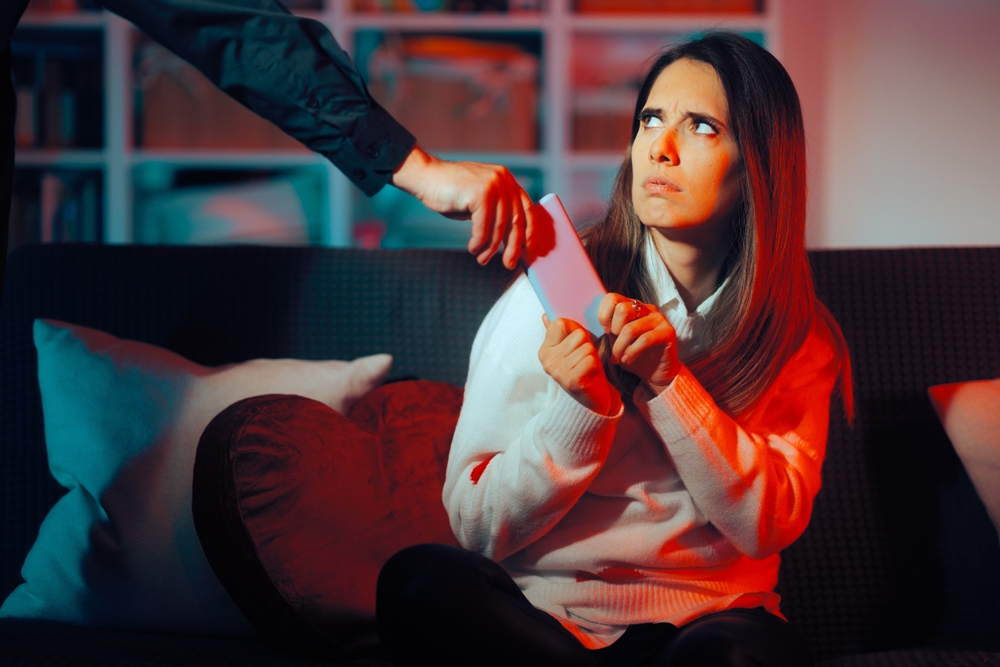
There can be a fine line between healthy boundaries and controlling behavior in a relationship. One partner’s need to feel secure in their relationship can lead the other to feel confined. The need for control often comes from a good place, wanting to keep those important to you safe and secure, but it can put strain on a relationship. Understanding the connection between anxiety and controlling behavior can help both partners find a balance that protects your relationship and your independence.
Controlling Behavior Can be a Result of Unchecked Anxiety
For many people, the desire to control the world around them, and their romantic partners, stems from feelings of anxiety. If you or your partner struggles with anxiety disorders, or are experiencing life pressures that make you feel out of control, one response may be to control what you can, including your spouse or romantic partner. Many common anxiety symptoms can trigger controlling behaviors, such as:
- Excessive worry,
- Intrusive thoughts,
- Rumination (going over the same thoughts again and again),
- Catastrophizing (imagining worst-case scenarios)
- Avoidance of triggers
Negative past experiences including Adverse Childhood Experiences (ACEs) or traumatic events resulting in post-traumatic stress disorder (PTSD), may drive you or your spouse to avoid anxiety triggers and re-traumatizing events by controlling the present in an effort to feel safe. Similarly, people who live with Obsessive-Compulsive Disorder (OCD), may find struggle with intrusive thoughts that demand specific actions, some of which could affect your household and spouse.
Get Help with Anxiety and Controlling Behaviors.
Talk to a couples therapist about how controlling behavior is affecting your relationship today.
Controlling behavior is often an unhealthy coping mechanism, which can put unnecessary strain on a relationship. That is because when acting out of a desire to regain control and prevent negative outcomes, the controlling partner can inappropriately interfere with their spouse’s independence, boundaries, and autonomy. That can lead to conflict, and in severe cases, can escalate to emotional, mental, or even physical abuse. That is why it is a good idea to identify controlling behaviors early, and to get help addressing the underlying anxiety that may be causing them.
Identifying Controlling Behavior in a Relationship
When you think of controlling behaviors, you may imagine a person who gets aggressive when things don’t go their way at home. While this kind of controlling behavior is the easiest to spot, there are many more subtle controlling behaviors that often come first. They may target the individual themselves, their spouse or children, the home, or the situation more generally. Depending on the type of anxiety a partner is experiencing, controlling behavior could look like:
- Detailed routines that must be kept (i.e. inflexible dinner times or chore schedules)
- Rigid expectations for the “right way” to do household tasks
- Over-preparing for events or over-researching family decisions
- Reviewing household expenses and purchases
- Micromanaging chores and household maintenance
- Taking over decision making for joint decisions
- Casting blame for accidents or misfortune
- People-pleasing to control others’ reactions
- Demanding that tasks be completed before anyone can relax
- Developing unnecessarily complex action plans
- Perfectionism
- Inability to delegate tasks
While some of these behaviors can be healthy within limits (after all, someone needs to decide what is for dinner), they can leave the anxious partner feeling burnt out as they manage the stress of keeping their own emotions in check. And it can cause your partner, children, and other household members frustration and resentment when they are not able to make decisions for themselves or express their own preferences and feelings (in age-appropriate ways, of course).
How to Address Controlling Behavior in a Relationship
The problem with controlling behaviors in a relationship is that they never fully work. There will always be things outside the family’s control. No amount of planning, micromanaging, or control will keep a storm from disrupting your travel plans or a layoff from happening at work. When bad things happen, you need to have the ability to address the resulting anxiety without clamping down on control.
Communicate About Your Anxiety, Frustration, or Resentment
Communication is an important tool in a couple’s toolbox when dealing with control issues. One good way to address controlling behavior is to talk about the feelings behind them without judgment. Rather than saying “you need to do this” or “it has to be done this way,” a controlling partner can explain what they fear will happen, or that they are anxious about something bad happening. This makes it easier for their spouse or partner to respond with empathy, rather than resentment, and find ways to address those fears in a collaborative way.
Similarly, when an anxiety response crosses a boundary, you should communicate how the controlling behavior is making you feel in ways that reflect your own needs, rather than shifting blame. For example, if your spouse is constantly checking your location, you could say that you feel untrusted, or frustrated that you cannot have time alone without interruption. This kind of communication can help a controlling partner understand the effects of their behaviors, giving them motivation to change.
Build Up a Tolerance for Uncertainty
If you or your spouse struggles with feeling unsafe, demanding that controlling behaviors stop all at once is not likely to work, and may backfire by making the anxious partner feel less in control. Instead, you should work together to build trust and accommodate the need for security while at the same time embracing uncertainty in small ways. For example, if one spouse historically had to be the one planning dinners due to food-related anxiety, setting out dietary restrictions and then letting the other spouse choose one recipe a week could be a good first step. Over time, the anxious partner can develop a tolerance for uncertainty that is built on trust that your spouse wants you to feel safe and stress-free, allowing you to work together to find a balance you can both live with.
Get Help Developing Healthy Anxiety Coping Mechanisms
Just because a person exhibits controlling behavior once in a while does not mean that he or she is abusive, or that the relationship is over. There are ways to address controlling behavior, establishing and respecting boundaries, and developing other, healthier coping mechanisms. But unlearning controlling behaviors is generally not something a couple can do on their own. Especially if you and your spouse have developed unhealthy patterns of behavior, anger, frustration, anxiety, and resentment can get in the way of making meaningful change.
In those cases, working with an experienced psychotherapist can help you break out of your unhealthy routine. Your therapist can help you identify your controlling behaviors, name and explain your emotions, and develop plans for meaningful and lasting change. By working with a couples therapist to identify and address controlling behavior and the anxiety behind them, you can put your relationship first, while also helping ease your or your partner’s anxiety about the future.
David Stanislaw is a psychotherapist with over 30 years of experience. He helps individuals and couples learn strategies for minimizing conflict in their relationships. Contact David Stanislaw to get help today.
 Using Short-Term Therapy to Break Depression Patterns
  Focusing on Your Family’s Emotional Unit
 Can Short-Term Therapy Improve Your Parent-Child Relationship?